
Polycarbonate (PC) is a popular material, often regarded as the gold standard for durability and versatility. It is widely used in the LED lighting industry for various applications, including channel letters, sign facing, light diffusers, and covers. This article will focus primarily on the last of these. Due to their thermal stability and toughness, covers made of polycarbonate offer excellent protection for any LED light source.
However, you might have previously seen PC components that have turned an unsightly yellow or become brittle. This is the result of something that’s often overlooked about this polymer: polycarbonates are not created equal. They have different properties depending on their exact composition. With this in mind, let’s explore the nuances of this material to understand the importance of selecting the right variant to ensure the long-term quality and performance of LED lighting applications.
What Makes Polycarbonate the Ideal Choice for the Lighting Industry?
This thermoplastic took the lighting industry by storm, becoming an integral part of LED light fixtures in both commercial and residential spaces due to its extraordinary durability and safety profile.
But let’s start by answering the main question: What exactly is polycarbonate (PC)? Simply put, it is a plastic polymer that can be recycled and reshaped almost indefinitely through methods such as injection moulding, thermoforming, and extrusion. This is possible due to the material’s properties, which change based on the temperature it’s subjected to – it becomes mouldable when heated and hardens when cooled.
While polycarbonate is known for its exceptional resistance and transparency, it’s worth noting that the market is flooded with variations. The final characteristics of the material depend on the specific additives blended with the base resin, creating different grades suitable for different purposes. However, before diving into the complexity of various additives and their impact, it’s important to understand the fundamental advantages of polycarbonate that contribute to its widespread use.
High Impact Resistance
The relative strength of polycarbonate is phenomenal, especially when compared to standard glass used in fluorescent tubes and incandescent bulbs. Although not indestructible, it is often considered to be virtually unbreakable, with impact strength capable of withstanding extreme force and severe environmental conditions without breakage. This makes LED aluminium profiles with PC covers safe for low-level installations and high-traffic areas.
The superior durability of polycarbonate allows for the possibility of down-gauging components in many applications, which reduces their weight and production costs. These down-gauged polycarbonate LED covers not only maintain their original characteristics but also ensure excellent light diffusion and optical properties.
Heat Resistance and Thermal Stability
While modern LEDs are highly energy efficient and have a lower operating temperature than old lighting types, they still generate considerable heat, particularly high-output LED strips lightly enclosed in aluminium profiles. Consequently, the plastic used to cover them must be able to safely operate within a wide temperature range without expanding, shrinking, or warping over time. Unlike cheaper plastic alternatives, high-grade polycarbonate offers exceptional heat resistance, so exposure to elevated temperatures doesn’t pose a threat to its condition or performance. Additionally, it boasts a very low flammability, making it a safe choice for indoor environments.
Uncovering the Truth: What the ‘Polycarbonate’ Label Really Means
Despite its impressive physical attributes, the primary disadvantage of polycarbonate is the fact that the simple “PC” label on a product tells the buyer very little on its own. To fully understand the properties of your chosen product, it’s crucial to check the material’s specifications. In its raw form, this plastic polymer has certain weak spots that affect its lifespan and performance, such as high susceptibility to UV radiation and a relatively soft surface that’s easy to damage. To eliminate, or at least minimise, these flaws, manufacturers blend various specialised additives with the polymer. This process gives them the ability to custom-tailor properties suitable for specific environmental conditions.
To illustrate this with practical examples, let’s go over some of the most common additives used in the production of polycarbonate sheets.
Combating the Yellowing Effect
A major concern is how the material reacts to the environment over time. Pure, transparent polycarbonate resins are naturally susceptible to severe degradation from ultraviolet rays. If an LED light cover is not resistant to UV radiation, it will undergo a chemical process (photo oxidation) that causes unsightly yellowing and structural brittleness. To combat this issue, it’s important to use polycarbonate mixed with a protective additive that ensures proper UV protection and significantly prolongs the lifespan of PC components.
Overcoming Surface Softness with Anti-Scratch Coatings
Unfortunately, in the case of polycarbonate, being impact-resistant doesn’t equal being scratch-resistant. In fact, the surface is rather soft and prone to micro-scratches even from simple maintenance. Over time, these fine scratches can accumulate, dulling the surface and reducing the amount of light that gets through the cover. For lighting solutions in dusty environments, where frequent cleaning is necessary, or for low-level lighting that may be easily damaged, it’s advisable to choose polycarbonate LED covers with anti-scratch coatings. This will help keep them in their original condition for a longer time.
Keeping It Clean: Anti-Static Properties
Synthetic components tend to generate static electricity, which essentially turns the covers into magnets for airborne dust and dirt. A significant buildup of dust is not only unpleasant to look at, but it can also trap heat and block a significant portion of the light output. By incorporating anti-static additives, high-grade covers repel dust accumulation, reducing the need for constant cleaning.
Finding the Perfect Balance: Light Transmission vs. Light Diffusion
The primary job of an LED cover is to manage how we see the bright LED light source. This involves a delicate trade-off between light transmission and light diffusion.
To fully understand this optical balance, it’s important to familiarise yourself with a few essential technical terms:
- Light transmission: The amount of light produced by the diodes that passes through the cover. A higher rate means a brighter room.
- Light diffusion: The scattering of rays as they pass through the material. Evenly diffused LED strip light appears softer, creating a smooth and uniform glow rather than harsh, directional beams.
- Glare: Visual discomfort or eye strain caused by excessive, uncontrolled brightness, typically experienced when looking directly at an uncovered light source.
- LED hot spots: The intensely bright dots of illumination on the strip, which appear when the individual diodes are visible through the cover instead of forming a seamless line of light.
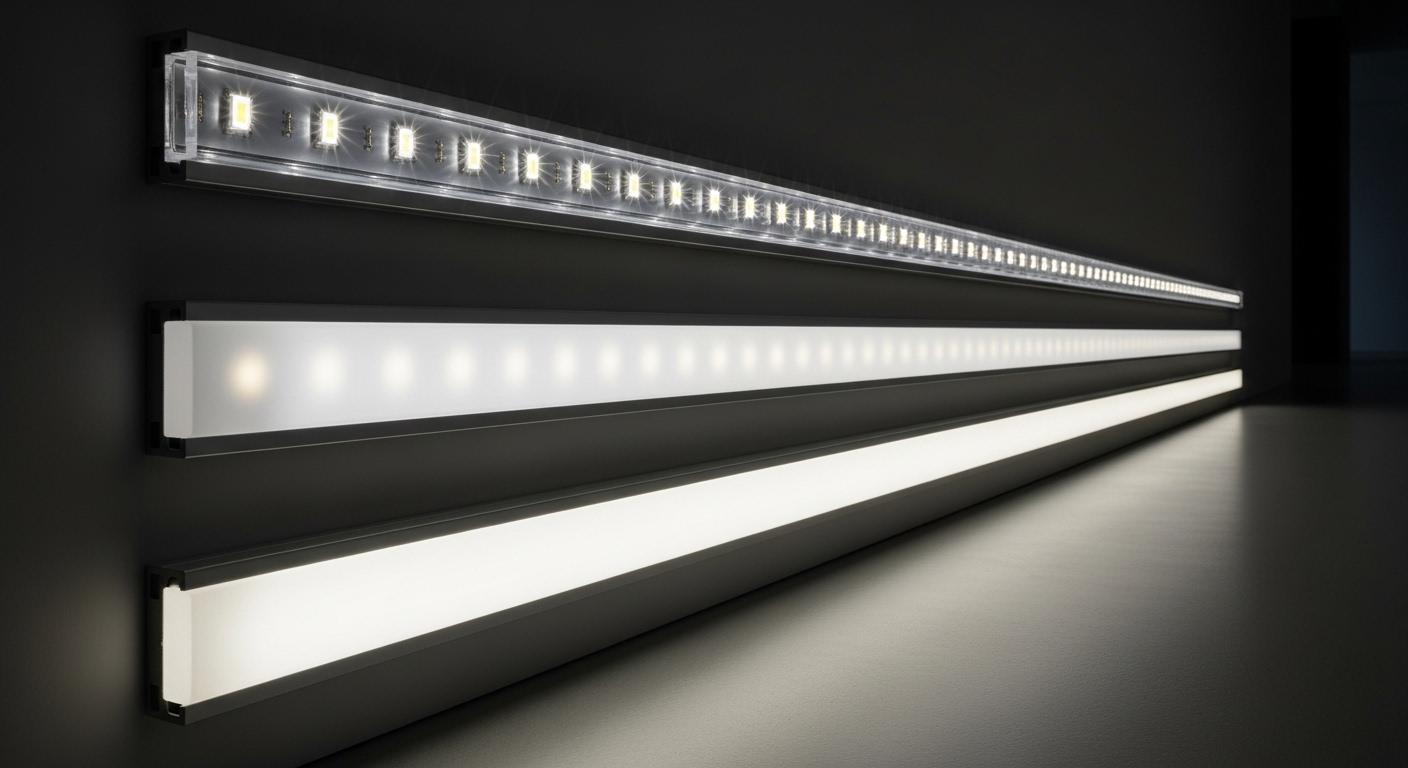
A transparent cover offers the highest light transmission, but fails to hide the “hot spots” of individual diodes, which can cause uncomfortable glare. To solve this, manufacturers use a light diffusion additive to make polycarbonate covers that can diffuse and scatter the rays. When done correctly, this creates excellent light uniformity, making the profile look like one solid, glowing bar.
To diffuse light properly, you need to understand how the optical properties of different covers affect lighting and interact with your space. For example, a clear cover maximises brightness but offers zero diffusion, while an opal one (also known as milky) heavily scatters the light, completely masking the internal components and limiting the level of brightness. Frosted covers provide a middle ground: they soften the light slightly but maintain high efficiency, thus offering greater design flexibility.
Invest in High-Quality LED Lighting Solutions from MarcLED
Selecting the right cover goes beyond aesthetics; it is about ensuring that all components of your installation last as long as the LEDs themselves. At MarcLED, we understand this perfectly. That’s why our range consists of carefully selected products that combine long-term durability, high quality, and unmatched performance, seamlessly elevating your lighting at competitive prices. Browse our selection of LED strips, profiles, light diffusers, and more. If you have any additional questions about our products, please don’t hesitate to contact us.
Polycarbonate LED covers: FAQ
Does polycarbonate always turn yellow over time?
Not if it is properly UV stabilised. High-quality resins with the right additives are resistant to UV radiation and designed to stay clear for many years.
What is the difference between polycarbonate and acrylic (PMMA) covers?
While acrylic (also known as PMMA) covers are naturally clear and highly resistant to sunlight, they are also quite brittle. Polycarbonate provides much higher impact resistance and better heat resistance, along with a variety of optical options to choose from.
How much light is lost through a frosted polycarbonate cover?
High-quality covers usually maintain a light transmission of 60% to 90%, depending on the level of diffusion required. This means that the light loss can range from 10% to as much as 40%.
Is polycarbonate fire-resistant?
Yes, it has exceptionally low flammability and is much safer than other types of plastic and materials, such as standard glass, which may shatter when exposed to high temperatures.
Can I use polycarbonate covers for outdoor LED installations?
Absolutely. Its phenomenal impact resistance and excellent UV protection make it perfect for both indoor and outdoor applications.